3. Materiality
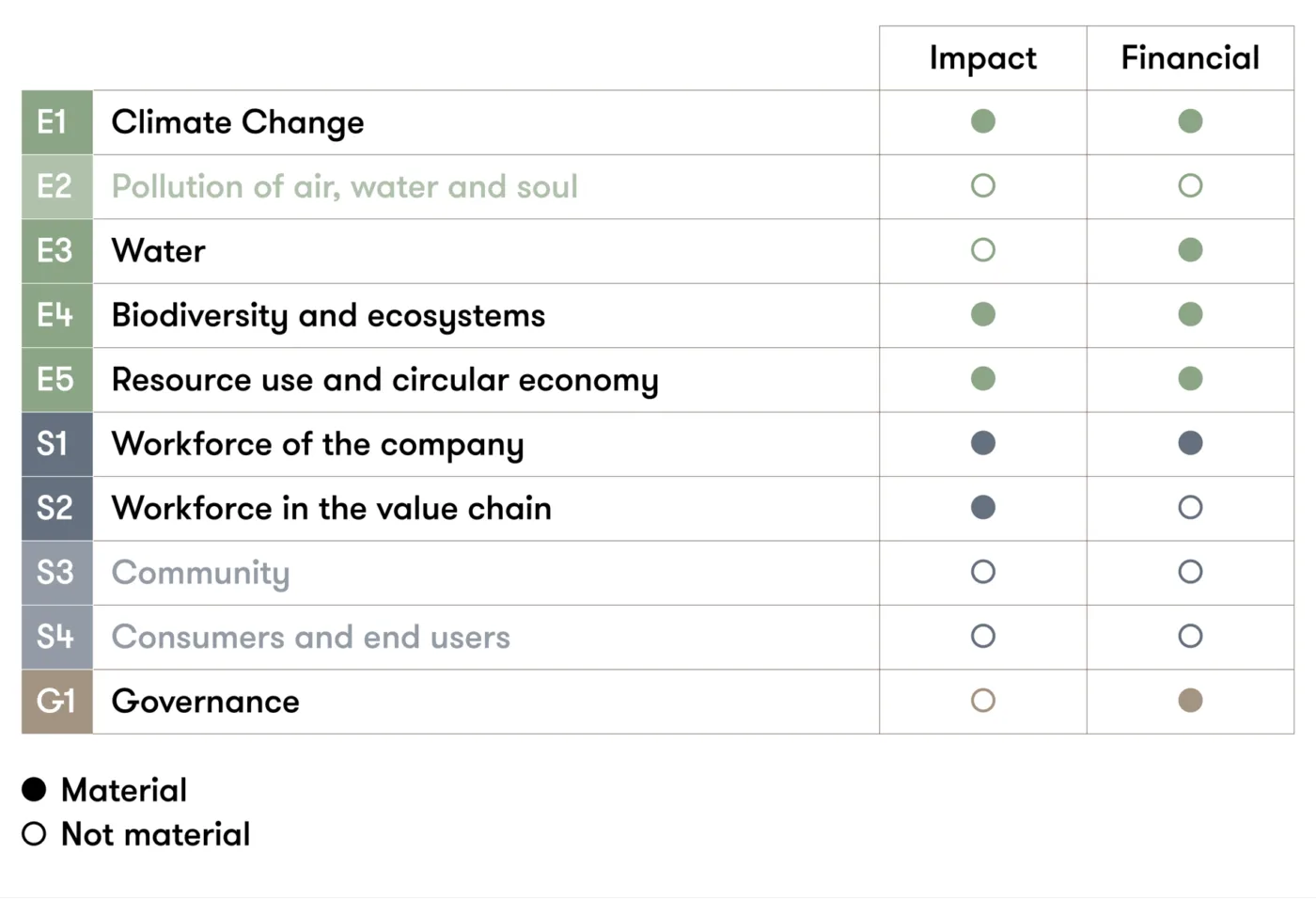
Not all sustainability topics are equally relevant to every company. To address this, we conducted a double materiality analysis, deliberately exceeding the requirements of the VSME standard. This analysis systematically examined both where our business activities have the greatest impact on the environment and society (inside-out perspective) and where sustainability topics pose the most significant financial risks and opportunities for Dolder Hotel AG (outside-in perspective).
The analysis serves as a strategic management tool, providing the foundation for embedding sustainability into our corporate development and allocating resources where they will have the most impact. Its findings shape the core of our sustainability strategy and guide the focus of this report. The analysis was conducted with technical support from the Terra Institute.
The process followed a structured approach divided into three key steps:
Identification of topics
We began with a detailed analysis of our business model and its broader context. Preparatory work included a SWOT analysis to assess internal strengths and weaknesses, as well as external opportunities and risks, alongside a PESTEL analysis to systematically evaluate political, economic, social, technological, environmental, and legal factors. In addition, we evaluated internal insights, external ESG frameworks (specifically the esg2go Rating & Reporting and the ‘10 Key Performance Areas’ according to EarthCheck), regulatory requirements and industry-specific developments in the international luxury hotel sector. From this overall assessment, a comprehensive list of potentially relevant sustainability issues was derived.
Assessment of impacts, financial risks and opportunities
Based on the identified topics, we evaluated both the actual and potential impacts of our business activities on the environment and society (inside-out perspective), as well as the financial risks and opportunities linked to sustainability (outside-in perspective), in alignment with Dolder Hotel AG’s business model.
Impacts were assessed according to their severity, while potential impacts were evaluated based on both severity and likelihood of occurrence. Financial risks and opportunities were analysed in terms of their potential impact on the company’s development, financial position, and performance, both in the short and long term.
The assessment used a three-point scale (1 = low, 2 = medium, 3 = high) for severity or financial impact and likelihood of occurrence. This methodology is based on the risk assessment framework of our EarthCheck-certified sustainability management system, which integrates the identification and evaluation of actual and potential impacts – environmental, social, and cultural – as a core component. By applying this proven logic to the double materiality analysis, we ensured alignment with our existing management system.
The assessment incorporates a range of perspectives: insights from existing guest and employee surveys, internal evaluations by the Executive Board and sustainability managers, as well as regulatory developments and industry-specific benchmarks. A targeted stakeholder survey for the materiality analysis was not conducted during the reporting year. The perspectives considered and the planned expansion of stakeholder engagement are outlined in Chapter 5.
Prioritisation and validation
We prioritised the material issues, validated them internally, and aligned them with our strategic direction to ensure a consistent and forward-looking focus. The findings form the foundation of our sustainability strategy and guide the content of this report.
The following materiality profile has emerged as a result of the dual materiality assessment: