
4. Sustainability Strategy C2, §48 – 49
The following strategic priorities are based on our double materiality analysis, which identified the sustainability topics most significant to Dolder Hotel AG.
Using these results, we have refined our sustainability strategy and anchored it in three key areas of action. The materiality analysis serves as the foundation, highlighting where our business activities have the greatest impact on the environment and society, and where sustainability topics present the most significant financial risks and opportunities.
Our areas of action
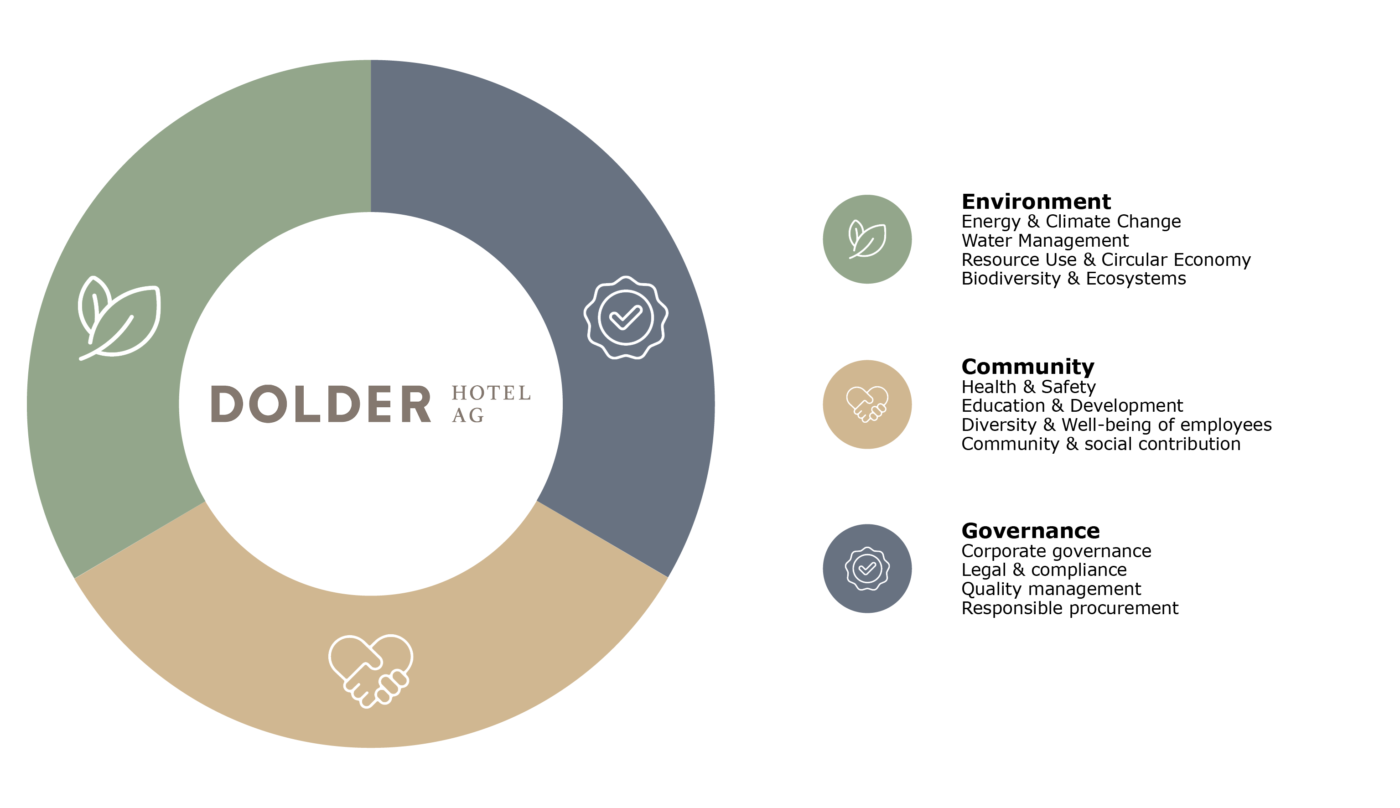
Working closely with partners, suppliers, employees, and guests, we are committed to reducing our resource consumption and ecological footprint. The double materiality analysis confirmed that climate change, water, biodiversity and ecosystems, resource use, and the circular economy are material for Dolder Hotel AG from both an impact and financial relevance perspective. Our focus is therefore on reducing greenhouse gas emissions and energy consumption, responsible water and waste management, the safe handling of environmentally hazardous substances, and promoting biodiversity at our sites.
Strengthening social values is central to our internal and external relationships. In particular, our own workforce and workers throughout the value chain have been identified as key priorities. As a fair and responsible employer, we champion diversity and actively promote the well-being of our employees. Through targeted training and professional development, we nurture individual potential and create safe, healthy, and respectful working conditions. We also see ourselves as a responsible host to our guests, prioritising personal safety, data protection, and social inclusion. Within our value chain, we focus on partnerships and expect our suppliers to uphold fundamental labour and human rights. Wherever possible, we promote regionality by giving preference to local suppliers and service providers, regional products, and employees from the surrounding area.
Profitability and efficient processes are essential to our competitiveness and continued growth. In the double materiality analysis, governance did not reach the materiality threshold from an impact perspective: Dolder Hotel AG operates in a regulated environment with established internal control mechanisms, and no significant negative impacts in areas such as corruption or bribery have been identified. Nevertheless, governance remains a strategic area of focus, as corporate culture, integrity, quality management, and responsible business relationships are the prerequisites for credibly and effectively implementing our environmental and social goals.
Our aim is to combine social and economic benefits within our core processes. This ensures our financial independence, enables the necessary investments in the further development of Dolder Hotel AG, and strengthens the long-term trust of our stakeholders.
The specific practices, strategies, key performance indicators, and objectives relating to our key areas of action are outlined in the following chapters – structured by Environment, Social Matters, and Governance.
The focus of our reporting is derived directly from the double materiality analysis, as outlined in the preceding sections. Issues that fall below the materiality threshold are not irrelevant. They may remain important to us for strategic, operational, or ethical reasons – whether because they are part of our corporate culture, are required by regulation, are expected by stakeholders, or serve as a prerequisite for achieving key objectives.
Our sustainability management system systematically captures these topics, continuously assesses their significance, and ensures they are managed appropriately. The materiality analysis itself is regularly reviewed and adjusted as necessary, for example, if the business model, regulatory environment, or stakeholder expectations change.
Overall responsibility for sustainability lies with the Executive Board of Dolder Hotel AG. Operational management is carried out by the Head of Quality & Sustainability and the Quality & Sustainability Manager, in close collaboration with the D-Impact team, which provides strategic impetus, and the D-Force team, which drives implementation across departments and with all department heads.